The quiet aircraft.
Why we spent two years insulating a cabin you cannot see, and what it sounds like at cruise.
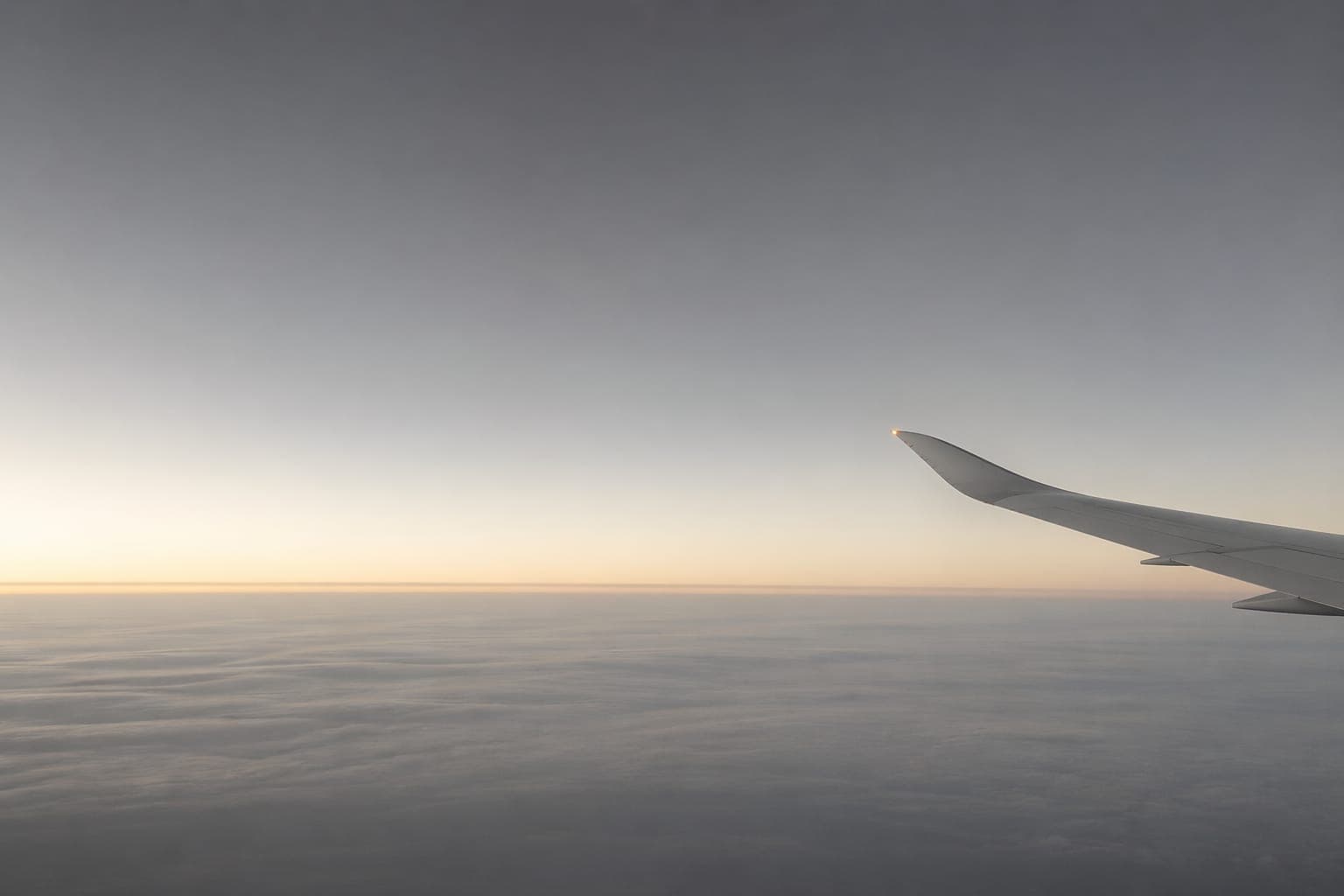
When we began the programme in 2022, we set a single, unfashionable target: measure the cabin at 52 decibels or below at cruise. Nothing in the industry was promising it. It is about the level of a small home office — the kind of room where a phone call does not need to be shouted.
The first thing we did was stop treating the cabin as a shell that had already been designed. We treated it as an acoustic room. The sidewalls were redrawn with a 640 g/m² Kvadrat wool, bonded to a viscoelastic damping layer, behind a 320-grit anodised-aluminium trim. The floor structure was reworked to decouple the passenger cabin from the freight hold. The air system was re-ducted to lower turbulence at the outlets — which was, it turned out, the loudest single noise source above the engines.
The result is an aircraft that arrives at cruise and then, quietly, gets quieter. If you have flown on one, you will know the sensation: the sense that the aircraft has settled into itself. If you have not, the best description we have is that you can hear a book open.
“We treated the cabin as an acoustic room, not a shell that had already been designed.”
A cabin is not a feature. It is a place. We are pleased to have made a quieter one.